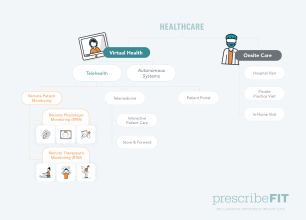
Medicare’s 2026 Physician Fee Schedule (PFS) Final Rule is now official, and it brings real improvements for Remote Physiologic Monitoring (RPM) and Remote Therapeutic Monitoring (RTM) that matter to private orthopedic practices.
But more importantly — these changes matter for patients.
Remote monitoring isn’t just about codes and reimbursement. It’s about helping people — especially those living with pain, limited mobility, or chronic weight-related conditions — get the consistent, personalized support they need between office visits. RPM programs like Prescribe FIT help patients reduce joint pain, improve surgical outcomes, reduce stress on joints, and stick with healthier lifestyle habits. The 2026 CMS updates make it easier for providers to deliver this kind of high-touch, proactive care — the kind that leads to real, lasting health improvements.
Between finalized national payment amounts, more flexible code options, and continued support for virtual care under general supervision, Medicare is reinforcing virtual care as an integral part of musculoskeletal (MSK) management — not just a temporary add‑on.
If your orthopedic practice is already offering RPM or considering it, this is more than incremental change: it’s a strategic revenue and care quality opportunity. Below we break down the finalized reimbursement rates, the policy shifts from 2025, and what they mean in practice.
Final 2026 RPM & RTM Payment Amounts
Here are the finalized 2026 national average Medicare payments for key RPM and RTM services (non‑facility, outpatient setting):
RPM (Remote Physiologic Monitoring)
- 99453 (Device setup & patient education): $21.71
- 99445 (Device supply — 2–15 days): $52.11
- 99454 (Device supply — 16–30 days): $52.11
- 99470 (10‑minute clinical management): $26.05
- 99457 (First 20 mins of clinical management): $51.77
- 99458 (Additional 20 mins): $41.42
RTM (Remote Therapeutic Monitoring)
- 98975 (RTM setup & patient education): $21.71
- 98985 (RTM MSK device supply — 2–15 days): $51.44
- 98977 (RTM MSK device supply — 16–30 days): $51.44
- 98979 (RTM first 10 mins): $26.39
- 98980 (RTM first 20 mins): $54.11
- 98981 (RTM additional 20 mins): $41.42
These figures reflect the 2026 National average non-facility-based payments from CMS.
What’s New in 2026 vs 2025
Compared with the 2025 RPM/RTM guidance, the 2026 final rule includes changes worth highlighting:
✔️ New Flexible Device & Time Codes
2026 formalizes the “2–15 day” supply code (99445/98985) and the shorter clinical time codes (99470/98979) that allow billing for partial months or shorter time engagements. This reduces the number of missed billing opportunities vs the old rigid requirements.
✔️ Continued General Supervision
CMS reaffirms that RPM and RTM services can be furnished under general supervision when provided incident‑to by clinical staff — a flexibility first introduced during the pandemic. This means non‑physician team members (e.g., Prescribe FIT health coaches) can deliver engagement without requiring the physician’s physical presence for every interaction.
More Flexible Billing = More Billable Patients
The combination of flexible device days and clinical time thresholds is a meaningful shift from 2025 and earlier.
Now, even partial engagement months can be billable thanks to the new 2–15 day codes and 10‑minute management codes. This significantly increases the number of months per year a patient can generate reimbursable claims.
For a refresher on how these RPM and RTM codes stack, and common billing pitfalls to avoid, see our Billing Guide.
What It Means for Orthopedic Practices
Orthopedic providers are uniquely positioned to benefit from these 2026 updates, because:
- MSK patients are highly appropriate for remote monitoring — e.g., tracking daily physical activity, daily nutrition, pain and mobility scores, and weight (aka pressure on joints, stress on MSK system).
- RPM/RTM supports prehab, post‑op recovery, and lifestyle health interventions that reduce complications and improve outcomes.
In fact, practices using Prescribe FIT today already see:
- 75% compliance on RPM device transmissions (99454)
- 90%+ of patients reaching traditional 80 minutes of management time (99457 & 99458)
With the 2026 rule’s flexible engagement thresholds, projected compliance rates are expected to rise above 95%, turning more patients into billable episodes without extra burden on clinical staff.
If you’re evaluating how to operationalize RPM in your practice, our Orthopedic RPM Guide is designed to help you understand the workflows and clinical engagements that drive both outcomes and consistent reimbursement: prescribefit.com/rpm-ortho-guide/
Virtual Health = Real Revenue
With the finalized 2026 payment rates and billing flexibility, monthly RPM/RTM revenue opportunities are stronger and more predictable than ever. Practices that adopt RPM as a strategic service line can generate:
- Recurring monthly reimbursement per compliant patient
- Improved patient retention and engagement
- Reduced downstream costs through better chronic disease and post‑op management
Several partner practices are already generating $1M+ in annual RPM revenue with little‑to‑no change in clinical workflows. With the new 2026 rules, those revenue streams are poised to grow.
Why Now Matters
If your practice isn’t using RPM today, the 2026 Medicare Final Rule is a clear market signal: virtual care isn’t optional — it’s expected.
Between strong payer support, clear reimbursement pathways, and growing patient demand for digital engagement, orthopedic care is evolving quickly. Practices that adopt a compliant, proven RPM strategy now will be positioned to build their practice and:
- Strengthen patient outcomes
- Diversify revenue
- Lead in MSK care innovation
Waiting means more than lost revenue — it means missing a chance to align your practice with how care is being reimbursed and delivered today.
Next Steps
Prescribe FIT helps orthopedic practices educate, enroll, and engage patients in reimbursable RPM and virtual health coaching programs — with no upfront cost and full support for operations, outreach, remote care delivery, and billing.
Published on January 26, 2026